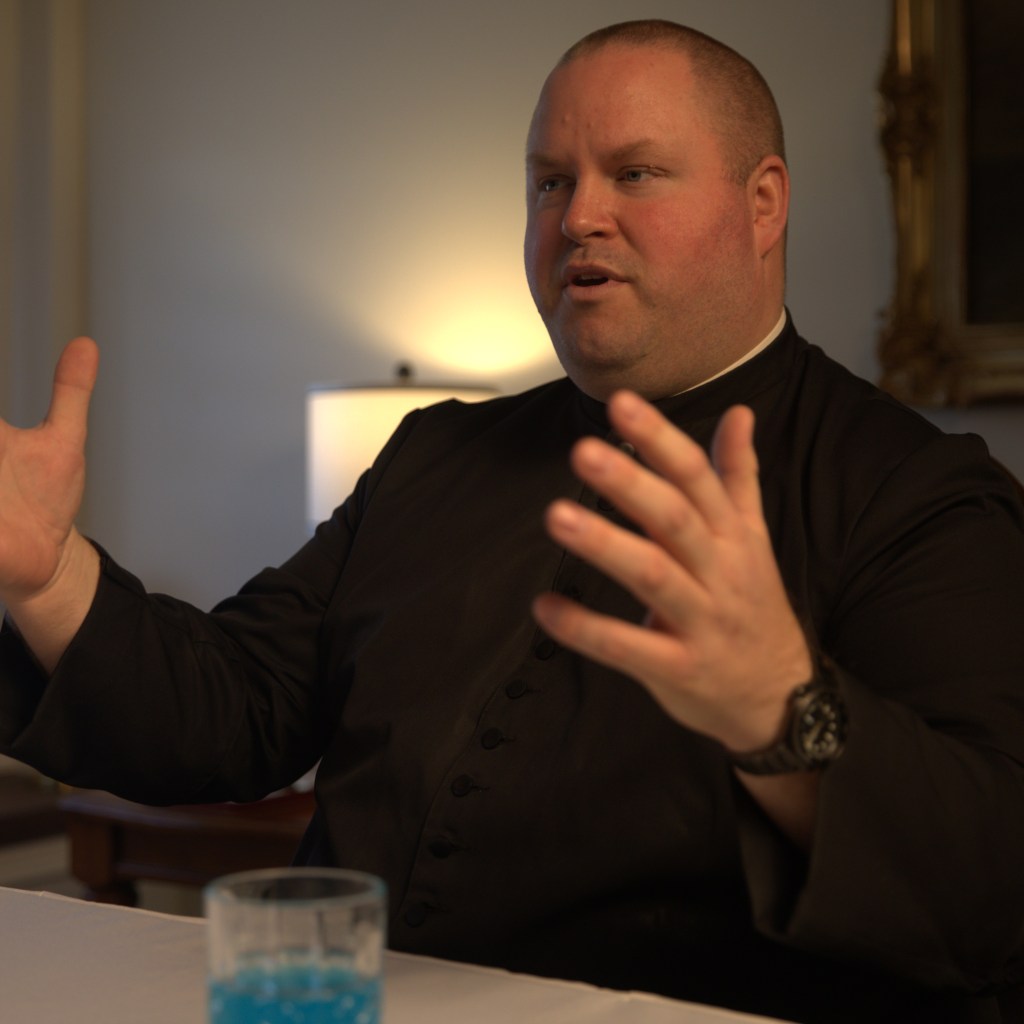
The story began with a girl who was frightened. She was eighteen years old, and she was carrying a child she could not keep. The world had a great many opinions about what such a girl ought to do, most of them tidy and most of them terrible. She did the brave thing instead, which is also the slow thing, and the thing that requires you to give away what you love. She said yes to the child, and then she said yes to letting him go.
Meanwhile, in another part of the same city, a man and a woman who had been married since 1980 were doing the difficult work of waiting. They had wanted children for nine years. The wife, who had made three promises on her wedding day, had kept two of them and was waiting on the third. She prayed every day to a particular woman who knows something about waiting for sons, and she said: if you give me a child, I will raise him in the faith.
The boy was born on the eleventh of October, which the Church remembers as the feast of the Motherhood of Mary. Two days later, on a Friday, the telephone rang in the house of the waiting parents. The man who delivered the news should have been named Gabriel, for this was an announcement that took a miracle of patience in waiting for.
The child was given the name Brandon by the girl who said yes, and the name Stephen Joseph by the parents who received him, with Brandon kept in the middle as a small, tender homage — a way of saying, we know where you came from, and we honour it. He grew up Italian on one side and Ukrainian on the other, with a grandmother who walked to Holy Mass every morning and once consoled a small grandson who wept the entire liturgy because they had arrived a single minute late and he could not serve. A child who weeps because he cannot serve at the altar is a child the world ought to watch carefully. The grandmother watched him.
In grade two, on a day set aside for children to announce their futures, the teacher came round the circle with the usual question. The other children said the usual things — fireman, hockey player, veterinarian. When she came to Stephen, he announced that he wished to be the Pope. This was, on reflection, somewhat ambitious. But the boy who aims at the chair of Peter is at least aiming in the right direction, and from grade two onward he never aimed anywhere else.
He served at the altar for twenty years before he was permitted to stand in the middle of it.
There were, of course, the small rebellions of providence — the moments where God, who is the most patient of authors, refused to let the protagonist skip ahead. The boy wished to enter the seminary straight out of high school. God said: not yet. He went instead to play football at a university he did not love, in a city where he had no friends, and he hated every minute of it. When he begged his mother to let him come home, she told him he had started something and would finish it. This is precisely the sort of thing mothers say, and precisely the sort of thing sons need to hear, and precisely the sort of detour by which a young man is made fit for a long obedience.
When at last he entered the seminary, his mother said something to him that he has never quite recovered from. I prayed every day, she said, to be given a son. I never thought I would give my son back. She gave him back anyway.
There was a year in which a spiritual director told him, on a silent retreat of all things, that he had no vocation to the priesthood. He broke the silence to call his pastor. The pastor, being a real father, told him to come home. He came home. The vocation story, which seemed for a moment to have veered off its tracks, had only been pulled tighter to the rails.
And then, after the years of formation and the years of doubt and the years of patient, plodding fidelity, he became a Priest. He stood in the middle of the altar at last. He served, and was served, and was given a parish, and did the small unglamorous work of Priests — anointing the dying, hearing confessions, blessing Rosaries, attending to floods in the parish hall five minutes before Holy Mass.
One Sunday evening, filling in at a parish where he was not supposed to be, he was walking from the narthex to the sacristy when a man in a paramedic’s uniform stopped him and said the Holy Mass had been reverent. Without thinking — which is to say, with the swift instinct of a man who has been listening to God for a very long time — Father Stephen turned and asked him whether he had ever thought about the Priesthood.
The paramedic said yes. He said his spiritual director had told him to telephone Father Stephen, and he had thought it would be strange to call a stranger out of the blue. They had been delivered to one another in a corridor, by a question neither of them had planned to ask.
That young man will be ordained a deacon in 2026, and a Priest the following year.
Now stand back. Look at the story again. A frightened girl in 1989. A grandmother walking to Holy Mass at dawn. A football season nobody wanted. A spiritual director who got it wrong. A pastor who got it right. A perpetual adoration chapel. A flood in a hall. A paramedic in a uniform. A question asked in a corridor without thinking.
It is, of course, a tangle. It is also, of course, a tapestry. The difference between the two is simply which side you are looking at — and whether you trust that someone is working at the loom.
He is. He always has been. And the thread, you may be sure, is still being pulled.