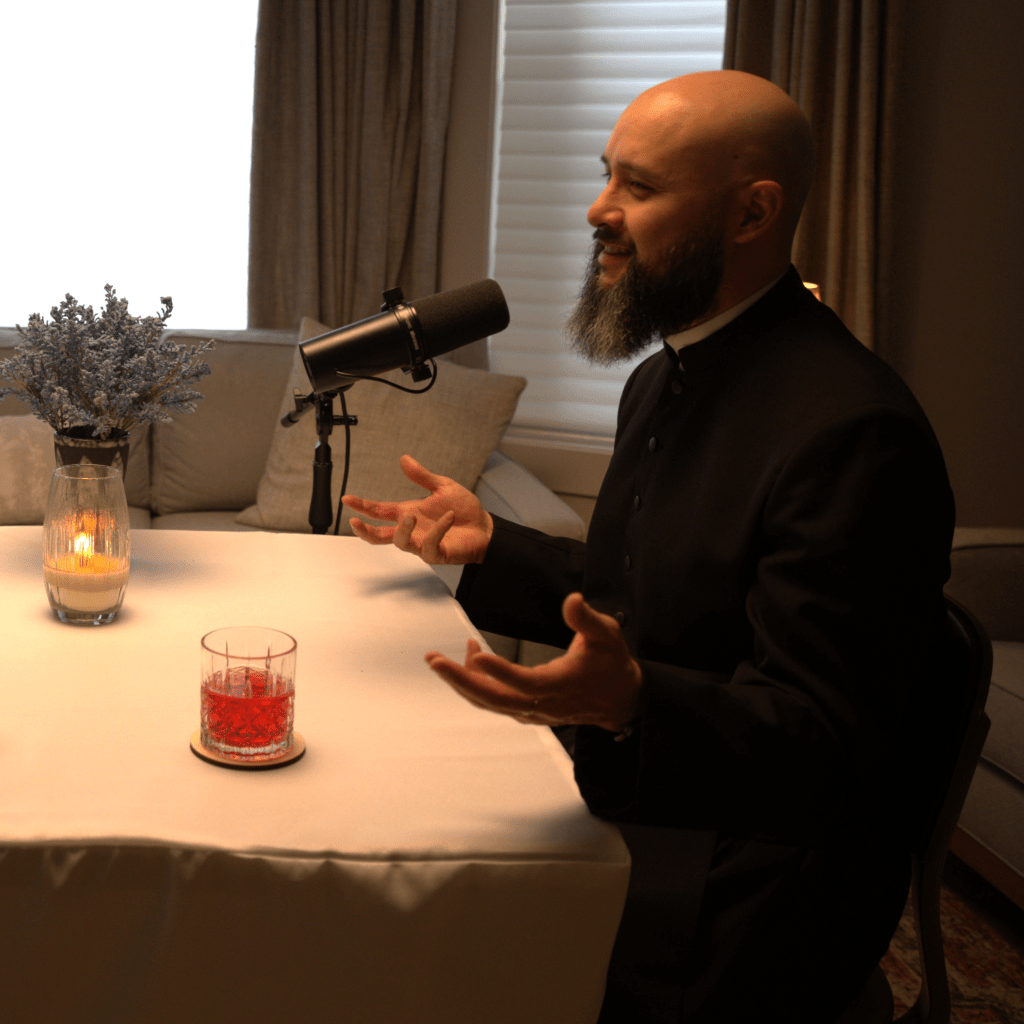
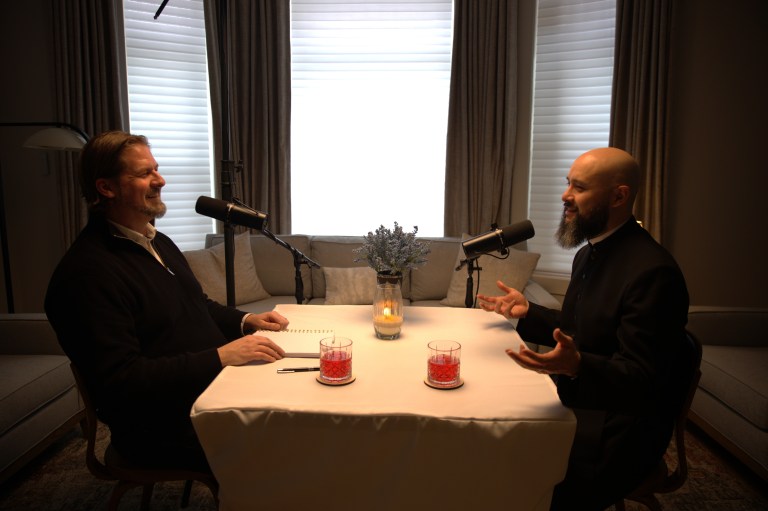
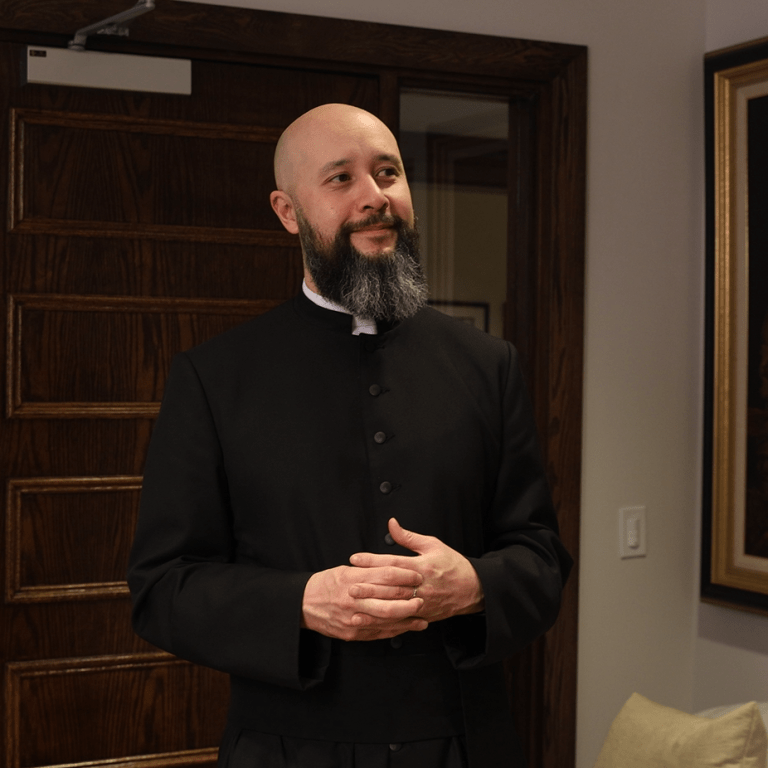
There are moments when a life looks not like a biography but like a small, simple miracle—a commonplace miracle, the sort that leads to wearing a collar but grew out of rosaries and hockey skates. Father Matthew McCarthy’s story is such a thing: not a thunderbolt from heaven but a steady procession of candlelight, each ordinary enough to be mistaken for mere habit, but when joined, luminous enough to be called a vocation.
Consider the simple facts: an Irish name that jumped across the ocean to the nearest land in Newfoundland, a Filipino mother who brought a choir with her into a Canadian parish, a father who tuned pianos by trade and tuned souls by habit, and a parish called Our Lady of the Airways where people met, married, sang, and potlucked as if heaven were a thing to be passed down the parish basement steps.
There is something almost comic and yet profoundly reasonable in a family whose faith is hammered not by thunder but by playlists and practice—rosaries recited on the way to hockey games, devotional readings shared in the car, and Nerf soccer erupting like a small, holy riot after Mass. Who but Providence would devise a way to make a liturgy out of logistics?
Chesterton liked to point out that the whole point of life is to see the extraordinary in the ordinary. Father McCarthy’s faith was not the melodramatic conversion-story that exposes God’s grace; it was the patient cultivation of a life lived Catholic. He did not fall off a cliff into belief; he walked along a path laid by his grandmother’s nightly prayers, his parents’ choir, and that small, shrewd question his father asked: “If Christ were passing by today, would you go see Him?” What father would plant such a question unless he believed that it was proper for children to have holy curiosities?
The priesthood itself is, in Father McCarthy’s account, a paradox. There is, he insists, but one true Priest—Jesus Christ—and yet Christ, in his comedy, delegates his priesthood to men. The priest is not merely a manager of ritual but a man configured to the Bridegroom; every Mass is spoken as a vow, every lifting of hands a wedding act. Imagine, if you will, the absurd glory of a human mouth being entrusted to speak divine vows, of mortal hands made instruments of the Real Presence. It is a higher kind of humility to be chosen to speak for another than to be chosen to speak for oneself.
He was ordained in 2017, and even now the memory of a Bishop’s hands upon his head can move him almost to tears. There is something tenderly comic in a man who knows himself so small and yet is given so immense a task: to serve as the visible instrument of an invisible Saviour and to director more men to that noble vocation. The lowly chosen to be the high; the imperfect sent to be an image of Perfection.
People, Father McCarthy observes, come to faith best when they come without cunning, without the polished defenses of pride. The poor in spirit, those who have no leg to stand on, are curiously the ones to whom Christ runs quickest. That is not merely theology; it is a moral astonishment: that the King should befriend those who are friendless, that the Bridegroom should seek those who are not looking for him. Yet the world conspires against such encounters with distractions: doomscrolling, drink, the proud self-sufficiency taught by schools and careers. Pride, he calls the primordial sin, and it is indeed a stubborn little devil that persuades men they need nobody—least of all a priest.
And what of the priest compared with other ministers? Here again is surprising romance: a Catholic priest is not merely a minister of assembly but a husband to a mystic Bride. The Mass is a sacrifice, yes, but it is also a wedding—more paradox where the altar should both represent the ending of a life and nuptial bed that begins life. Where others lead an assembly, the priest, configured to Christ, becomes the Bridegroom’s voice; the liturgy then becomes not mere ceremony but a transporting of the soul into the supernatural.
If there is a lesson tangled up in all of this, it is an old lesson and therefore a new one: vocation blooms in the small niceties of family and parish. It is in the devotion of a grandmother who prays nightly, in a choir that has made music its habit for forty years, in parents who insist on the rosary even on long drives, and in a home where faith and sport and homework rub shoulders without trying to be the same thing. There is no heroic drama required; only the heroic patience of ordinary fidelity.
Father Matt’s testimony is at once modest and inexorable: he is moved by gratitude that such grace found him; he insists that what invites young men is not bombast but visibility—showing the fraternity of priestly life, the beauty of tradition, the transcendent lift of liturgy. He believes vocations spread when community priesthood is unveiled: when families and parishes make the mystery sensible, not by rhetoric but by sacrament, song, and shared life.
So here is the final paradox, which would have even pleased Chesterton: the best way to make the supernatural visible is to be exceedingly natural about it. Pray the rosary in the car. Play a song in the choir. Ask a blunt question about Christ passing by. Let the ordinary become sacrament, and the extraordinary will follow, not by spectacle but by the simple, sound logic of grace.
 Michael Smolders