In Defense of Those Who Receive Holy Communion According to the Ordinary Norms of the Catholic Church
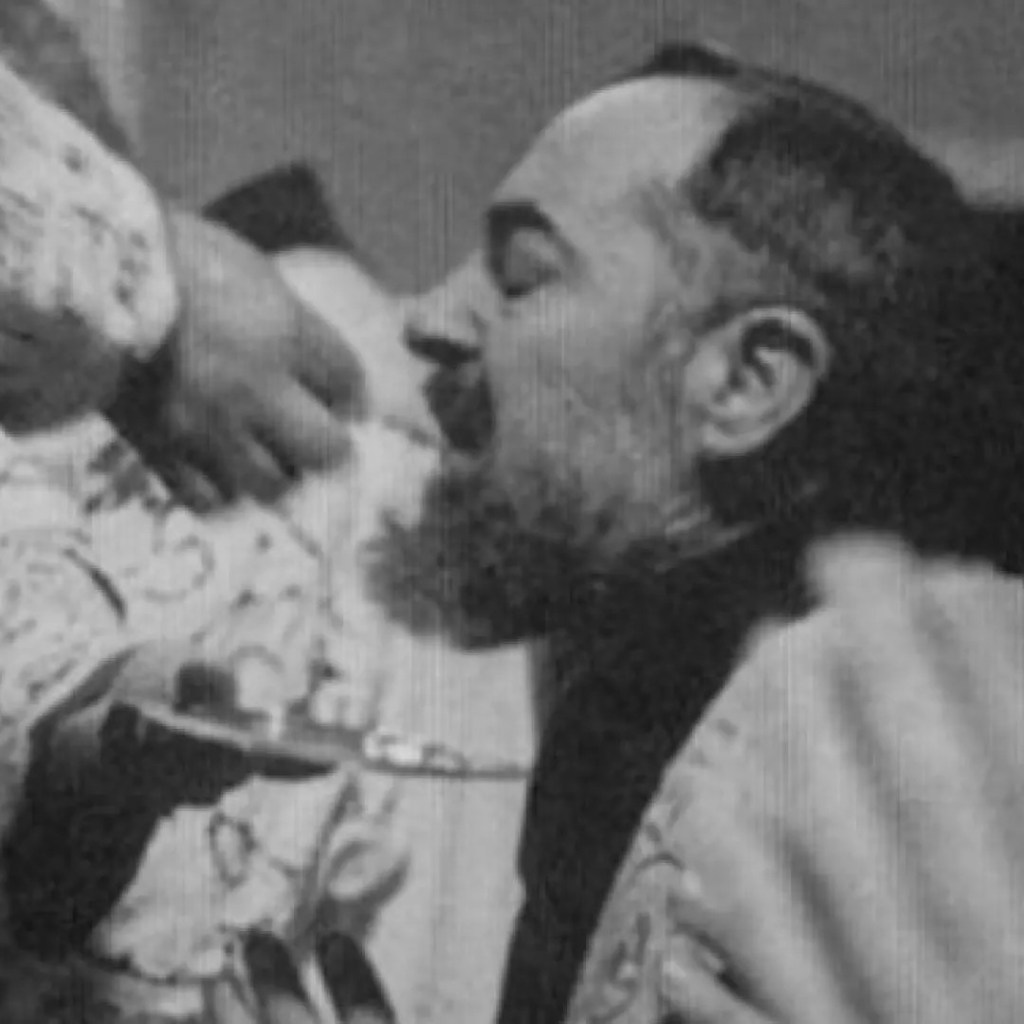
It is perplexing—and deeply concerning—that some in the Church react with disdain or even anger toward parishioners who choose to receive Holy Communion in the traditional, reverent manner: kneeling, on the tongue, from the hands of the priest. This desire for reverence is not rooted in ignorance or superiority, but in an instinctive recognition of the sacredness of the Eucharist, the very Body and Blood of Christ and the intimate act that is occurring between the Bridegroom and His Bride.
Recently, a Deacon of the Church published an article suggesting that this reverence is merely “snobbery” or “segregationist,” implying that it’s a childish or elitist attitude. The Deacon describes the act of a parishioner choosing to receive from a priest rather than an extraordinary Eucharistic minister as being uncharitable. While that article was riddled with theological errors and poor reasoning, it pointed to a deeper reality: a widespread discomfort with genuine reverence and a tendency to diminish the sacred in favour of convenience or superficial equality.
Let me clarify: This reply is not meant to judge or condemn anyone who receives differently, but to provide a voice for the humble elderly ladies whose instinct is to receive solely from a priest, even if they don’t know how to articulate why. For the traditionalists who act with the right reverence but could deliver their reasoning in a kinder manner. For the countless children who are watching our every move, because seeing is believing.
Is the Need Extraordinary?
The author of the article is to be commended for correctly using the term extraordinary when describing the role. The title is often shortened to “Eucharistic minister,” which omits this crucial adjective. The Church intentionally uses extraordinary to denote that such ministers are to be used only in exceptional circumstances, as the name implies.
It can be argued that more people are now participating in Holy Communion than in the past, and that this may reflect a contemporary need in our current circumstances. However, this is a complex issue that warrants careful consideration.
Firstly, Stats Canada and Pew Research Center reveals that weekly Mass attendance in Canada has declined from 67% in 1946 to 9% in recent years. These stats are also comparable to the US and European records.
Secondly, it’s important to reaffirm that the Church’s stance remains unchanged: receiving Holy Communion requires a state of grace. Anyone who desires to receive Christ in Eucharistic communion must be in the state of grace. Anyone aware of having sinned mortally must not receive communion without having received absolution in the sacrament of penance. (CCC 1415)
Ultimately, either our congregations are blessed and overflowing with living saints each Sunday, or we need to prayerfully reflect on whether some individuals should refrain from approaching the altar until they have first participated in the Sacrament of Reconciliation.
Nonetheless, contrary to some utilitarian beliefs, the Church explicitly states that the role of extraordinary ministers is not intended to speed up the distribution of Holy Communion. As stated in Redemptionis Sacramentum (p. 158): “However, is to be understood in such a way that a brief prolongation, considering the circumstances and culture of the place, is not at all a sufficient reason.”
Furthermore, the Church reaffirms that the priest should normally be the one distributing Holy Communion whenever he is able. It also warns against delegating this role without just cause: “The practice of those Priests is reprobated who, even though present at the celebration, abstain from distributing Communion and hand this function over to laypersons.”
While the Church permits a priest to allow a deacon to distribute Communion, this will be addressed later in the response. It is ultimately the priest celebrant’s responsibility to administer Holy Communion.
The question then arises: Why does the Church specify such detailed requirements for lay persons assisting in the distribution of Holy Communion? The answer is rooted in the sacred covenant between God and His people—symbolic of the divine marriage and the sacred union celebrated in the Eucharist.
The Theology of the Bridegroom and the Bride
At its core, the Holy Mass is a divine marriage—”the marriage supper of the Lamb” (Revelation 19:9)—where Christ, as the Bridegroom, weds His Church, the Bride. In the sacred mystery of the Eucharist, this marriage is consummated. Just as a bride and groom unite in sacred intimacy—clothing themselves with each other, giving themselves completely—the Eucharist is the divine consummation of this wedding.
Just as a married couple consummates their union by giving of themselves completely, so too does Christ enter into us through Holy Communion, making us one with Him in that sacred, mystical marriage.
This imagery isn’t mere poetic fancy—it’s rooted in Scripture. St. Paul speaks of Christ as the Bridegroom (Ephesians 5:25-32), and the Church as His Bride. The reception of the Eucharist is the sacred act that consummates this divine marriage. Receiving the Host on the tongue, directly from the priest’s hands, is an act of deep reverence and intimacy between Jesus Christ and His Bride— not partially between the Host and the recipient, but fully between the person of Christ entering Himself into His Bride. It’s a sacred, intimate moment between lovers. A special moment that is destroyed when proxies are employed in the process.
It’s the Same Jesus in the Eucharist
The most common justification for allowing laypeople to distribute Holy Communion is the assertion that it is the same Jesus. Who cares who gives Him to you because it’s still Jesus. There is a perception that people who choose to receive solely from a priest, believe that the Eucharist contains a greater holiness. Substantially speaking, the Blessed Sacrament does not lose its intrinsic holiness, even in instances of desecration. So, yes, it is the same Jesus. However, it would be imprecise to assert that the reception of Holy Communion remains intrinsically holy regardless of the method in which it is administered.
The Church, through Council documents and papal encyclicals, has long demonstrated that the Holy Spirit grants a special grace and power specifically to the hands of priests. The Church is unequivocal in its stance on this matter, even in the post-Vatican II era. Popes Paul VI, St. John Paul II, and Benedict XVI have consistently reinforced the unique dignity of the priesthood and the priest’s special role in distributing Holy Communion.
St. John Paul II, in Dominicae Cenae, states, “But one must not forget the primary office of priests, who have been consecrated by their ordination to represent Christ the Priest: for this reason their hands, like their words and their will, have become the direct instruments of Christ. Through this fact, that is, as ministers of the Holy Eucharist, they have a primary responsibility for the sacred species, because it is a total responsibility: they offer the bread and wine, they consecrate it, and then distribute the sacred species to the participants in the assembly who wish to receive them. Deacons can only bring to the altar the offerings of the faithful and, once they have been consecrated by the priest, distribute them. How eloquent therefore, even if not of ancient custom, is the rite of the anointing of the hands in our Latin ordination, as though precisely for these hands a special grace and power of the Holy Spirit is necessary! To touch the sacred species and to distribute them with their own hands is a privilege of the ordained, one which indicates an active participation in the ministry of the Eucharist.”
While the intrinsic holiness of the Eucharist remains unchanged, the grace associated with the celebration and reverence of the Eucharist can vary. For example, each Holy Mass is sacred, yet the Church designates specific solemnities for certain Masses, wherein participation can yield additional graces. Similarly, the manner in which we devote ourselves in prayer influences our souls’ readiness to respond to the promptings of the Holy Spirit.
The assertion that it doesn’t matter who hands you the Eucharist because it’s the same Jesus is casual reductionism with undertones of Marxism attempting to level the hierarchy of the Church. These egalitarian practices stand in direct contrast to Catholic sensibilities, the natural order, and the dignity of the Church.
This discussion does not center on personal judgments regarding the worthiness of the Eucharistic Minister to fulfill their role. According to Church doctrine, the only avenue to worthiness in this context is through the sacrament of Holy Orders as a priest. To further emphasize this point, it is significant to note that, in accordance with the ordinary norms of the Church, receiving Holy Communion from a priest is considered more appropriate than receiving it from the Blessed Virgin Mary, particularly if she had not yet been glorified in Heaven.
No one disputes that it is the same Jesus. However, it is not the same minister—and in this context, the Eucharist may retain its substantial holiness, but the mode of reception does not.
The Real Difference: Priests and the Sacramental Dignity
The distinction between the ordained priesthood and the lay person’s royal priesthood is deeply rooted in Sacred Scripture, Sacred Tradition, and Church teaching.
The Second Vatican Council’s Lumen Gentium (LG), in paragraphs 10 and 28, clearly states that hierarchy is a divine institution that confers a unique, irreplaceable role to the ordained priesthood, while still affirming that all the faithful share in Christ’s priestly vocation through baptism and confirmation.
The priesthood conferred through Holy Orders is not merely symbolic; it grants a real, sacramental share in Christ’s priesthood—one that is unique and unrepeatable. As Vatican II states in LG 10, the priest acts in persona Christi—in the person of Christ—in a manner that is not just symbolic but a real, efficacious presence. This sacramental character remains beyond ordination, making the priest a true alter Christus, with a special capacity to act in the name of Christ during liturgy and pastoral work.
Pope John Paul II’s encyclical Dominum et Vivificantem underscores the real distinction by emphasizing that the priest’s role is sacramentally linked to the offering of the sacrifice of Christ, making a real and ontologically different contribution compared to the participation of the laity in their baptismal priesthood.
This doctrinal truth carries profound implications—not only for the dignity of the priesthood but for how society perceives authority and service. When the priesthood is treated as merely functional or interchangeable, it diminishes the sacred dignity conferred by Holy Orders. Such misrecognition seeps into societal attitudes toward other authority figures—police, teachers, parents—and breeds misunderstanding and disrespect for true authority rooted in the natural order and justice.
Importantly, the practice of receiving Holy Eucharist only from an ordained priest does not diminish the lay participation in the priestly role; rather, it recognizes the profound, sacramental difference.
The priest, through Holy Orders, acts in persona Christi, offering the sacrifice on our behalf. The laity, by their baptismal and royal priesthood, participate actively and freely in the Holy Mass—praying, offering themselves with Christ, and receiving the Eucharist as sacred union between divine Bride and Groom.
The Sacredness of the Liturgy and Its Erosion
Unfortunately, in today’s liturgy, the sense of sacredness has often been eclipsed by casual attitudes, irreverent gestures, and hurried routines. It’s visible everywhere: laypeople entering the sanctuary with flip flops and shorts, opening the tabernacle after Holy Mass without due reverence, the mishandling of sacred vessels and countless immodest and impious conversations in our places of worship.
Pope Benedict XVI warned against trivializing this sacred act, emphasizing that “the reverence of the liturgy ought to be carefully safeguarded” (Sacramentum Caritatis, 52). Yet, many of these abuses have become normalized, dulling the sense of awe integral to the Holy Mass.
These minor abuses culminate into a major destruction of God’s holiest and most efficacious prayer, the Holy Mass. The very way we receive Holy Communion—kneeling, on the tongue, with reverence—and who we receive Holy Communion from—an ordained minister with consecrated hands—reflects the profound belief that we are entering into the divine marriage, uniting our souls with Christ Himself. When we overlook this, we risk turning the Holy Mass into a social event rather than a sacred mystery.
The Silent Suffering of Traditionalists
Many faithful who seek to preserve reverence in this modern era of progressive liturgies and impiety quietly suffer as they witness what all Saints through history would find appalling. They feel the loss of sacredness in the prayers, the music, the gestures—almost as if the majesty of Heaven has been reduced to a casual crowd at a banquet. They watch as the sacred is replaced by the profane, and often feel powerless to speak out. Already singled out by needing to cross lines at Holy Communion, they remain silent when true offences to Our Lord’s dignity are occurring.
Not wanting to separate themselves from the One Holy Catholic and Apostolic Church, they remain committed to their local parish and offer the internal suffering they are experiencing to Christ. All they ask is that they are left alone to worship how their conscience compels them and not be judged when the Holy Spirit’s gift of piety is generously poured into their soul.
Their perceived “holier than thou” attitude is nothing more than an acute awareness of their own deep sinfulness. Their reverence and devotion is like the Caanite woman begging for the crumbs that are falling from their Master’s table. (Matthew 15:22-27)
Their silent sacrifices—kneeling before the Lord, choosing reverence over convenience—are an act of faith and love, often unnoticed or even misunderstood. Yet, this quiet suffering is profoundly united with Christ’s own Passion, their meritorious prayers often directed towards the very parishioners who disdain their external forms of traditional worship.
The Reality of Sacramental Dignity
The Church’s discipline regarding the proper reception of Holy Communion is rooted in centuries of theology and sacred tradition. The practice of receiving on the tongue from the priest’s hand is not merely about tradition for tradition’s sake; it’s a sincere recognition that the Eucharist is the divine Bridegroom Himself. When He enters into us, it’s not a casual act—it’s a divine marriage, a sacred sealing of love.
The priest acts in persona Christi, not just as a presider—he is the sacramental sign of Christ’s presence and love. His hands, anointed at ordination, serve as the sacred conduit through which the Bridegroom himself enters into the Bride. To treat these hands as ordinary or merely functional diminishes the profound theological reality—Christ, through the priest, makes Himself present and available to His Bride.
Theological and Liturgical Roots
Holy Communion on the tongue developed early in the Church’s history to maintain the sacredness and hold fast to the truth that Our Lord is truly present. The shift back towards receiving in the hand, initiated during the Protestant Reformation and eventually infiltrated Catholic practice in the 1970’s. This slow erosion of the sense of reverence and belief in the Real Presence calls for a bulwark of faith to be restored through visible signs- just as the early Church wisely instituted.
Lex orandi, lex credendi—the law of prayer is the law of belief. When we diminish reverence in the liturgy—by casual gestures, distracted attitudes, or a loss of adoration—we risk weakening the faith of the next generation.
What We Are Called To Do
Our faith calls us to act differently—outward signs reflect inward belief. When we kneel before the Lord, receive on the tongue, and show reverence—especially in the context of the marriage between Christ and His Church, between the priest and his parishioners- we bear witness to the divine reality that Jesus is truly present, both in the Blessed Sacrament and in the person that hands Him to us.
This reverence respects not just the Sacrament but also those around us—child, adult, or elderly—teaching them that the Eucharist is no mere ritual, but the divine Bridegroom giving Himself fully to His Bride.
Final Reflection
The Incarnation making possible for Christ and His Church to be united as one is the deepest mystery of our faith. It’s a wedding that demands reverence, awe, and sacred space. When we diminish these acts—whether through negligent liturgical acts, casual reception, or neglect the divine dignity of the priesthood—we risk losing sight of the divine wedding banquet itself.
Ultimately, this issue extends beyond the question of who distributes Holy Communion; it encompasses the Church as a whole. Every doctrine and practice forms a coherent tapestry, intricately woven together and anchored at its center by the Holy Eucharist. While removing a single thread may not immediately distort the image, over time, the integrity of the tapestry will weaken, leading to more threads unraveling independently.
Let us, therefore, renew our hearts and minds. Let us remember that in every moment of Holy Mass, Christ is entering into us—His Bride—in the most sacred, intimate way. Our external acts of reverence, humility, and awe are not superficial; they are the language of love in which we acknowledge the divine marriage taking place.
May our reverent reception of the Holy Eucharist be a testament to the world that love supersedes utility. May the sacred Species move from altar to tongue without being passed around by proxies that the Church has instructed to be used only in extraordinary circumstances. May the Church’s centuries of traditional practice develop a deep and profound faith for the laity, rooted in the unbreakable bond of love between Christ the Bridegroom and His Bride, the Church.
 Michael Smolders